Why Circular Acoustics
Escalating Landfill Taxes
Retaining RoA
Cost of Churn
ATR Circular Intelligence is our proprietary engineering design process for creating acoustic infrastructure that performs, adapts, and returns intelligently into future use.
By combining digital manufacturing, bio-material science, modular geometry, and lifecycle recovery logic, we transform recovered material streams into commercially deployable interior systems for corporates, architects, interior designers, manufacturers, and asset owners.
Through this framework, ATR programs acoustic performance, repeatable assembly logic, design-for-disassembly, and scalable manufacturing principles into every system — moving acoustic treatment away from disposable fit-out products and toward long-life circular interior infrastructure.
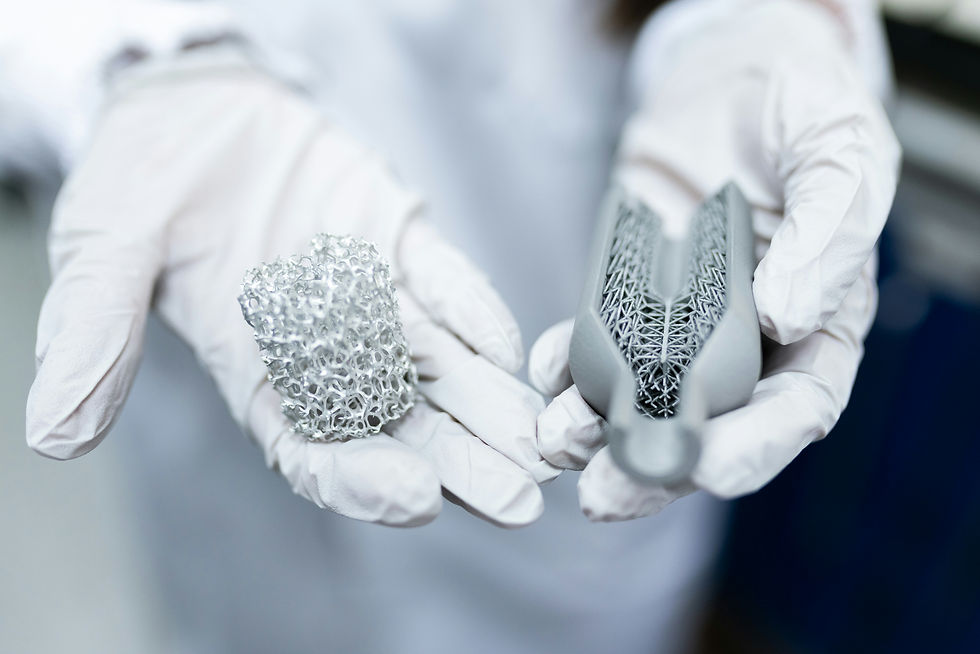
01 — Bio-Material Science
ATR materials are developed from upcycled organic byproducts, recycled fibres, and advanced bio-composite matrices.
By studying material density, surface geometry, airflow resistance, porosity, and internal tortuosity, we tune our systems to target the frequencies most relevant to human speech, workplace comfort, and commercial acoustic performance.
The result: materials engineered not only for circularity, but for predictable acoustic behaviour in real commercial environments.

02 — Acoustic Performance
Circularity only matters if the system performs.
ATR products are engineered to improve acoustic comfort across commercial interiors by combining material science, surface area, spacing logic, and modular geometry. The objective is to reduce noise disruption, improve speech clarity, and support calmer, more usable interior environments.
The result: acoustic performance embedded into the architecture, not added as a decorative afterthought.

03 — Architectural Integrity
ATR systems are designed to reduce visual noise as much as acoustic noise.
Each product is developed to integrate with ceiling planes, wall systems, lighting, furniture, partitioning, and spatial rhythm. This allows acoustic performance, architectural geometry, and interior consistency to operate as one scalable infrastructure system.
The result: premium acoustic solutions that support design intent rather than compromising it.

04 — Advanced Digital Manufacturing
ATR uses parametric design and digital manufacturing logic to control geometry, component relationships, tolerances, and repeatable assembly.
This enables customised architectural expression without losing the efficiency of a standardised product platform. Components can be scaled, configured, manufactured, and deployed with greater precision across commercial environments.
The result: bespoke architectural geometry delivered through repeatable manufacturing logic.

05 — Lifecycle Economics
ATR reframes acoustic systems as long-life commercial assets rather than single-use fit-out expenses.
Through non-destructive installation, design-for-disassembly, reconfiguration, reuse, circular recovery, and regional material sourcing, our systems are engineered to reduce the hidden costs of tenant churn, refurbishment, demolition waste, replacement cycles, logistics complexity, and landfill dependency.
This commercial logic extends into material selection. ATR prioritises recovered and bio-based inputs that can be sourced intelligently, manufactured consistently, and scaled regionally. A circular material only makes business sense if it reduces operational friction — not if it creates avoidable transport cost, supply risk, or carbon burden.
Circular recovery is built into the same model. Components are designed to be removed, reconfigured, reused, or returned into the manufacturing loop where technically viable — protecting material value beyond first installation.
The result: acoustic infrastructure that retains value beyond first use — commercially, materially, operationally, and regionally.

The ATR Approach
ATR converts acoustic treatment from a disposable fit-out expense into a modular interior asset — designed to move, adapt and retain value across multiple commercial uses.
03. ESG regulation is shifting from intent to asset value
Circularity is no longer just a sustainability message. It is becoming a valuation and compliance issue for commercial real estate. JLL research found that BREEAM certification was associated with 20.6% higher capital values, while BREEAM-certified buildings also showed an 11.6% average rental uplift.
The ATR Approach
ATR converts acoustic treatment from a disposable fit-out expense into a modular interior asset — designed to move, adapt and retain value across multiple commercial uses.
Shorter leases, hybrid work, office repositioning and constant tenant change are making traditional acoustic fit-outs commercially inefficient. Acoustic panels, foams and composite systems that cannot be easily removed or reused become part of the demolition cost at every turnover. The built environment already produces around one-third of the world’s waste, creating a strong case for reusable interior systems.
The ATR Approach
Circular acoustic systems reduce reliance on disposable acoustic treatment by designing products for installation, removal, reconfiguration and recovery from the outset.

Commercial fit-outs create significant waste. The Better Buildings Partnership notes that a fit-out project can generate more than five tonnes of waste for every 100 sq m of floor space. At the same time, UK standard landfill tax increased to £126.15 per tonne from 1 April 2025, up from £103.70 per tonne.
01. Waste and landfill costs are becoming a financial liability.
02. Tenant churn is exposing the weakness of single-use fit-outs